Cut And Fill Explained: How Balanced Earthworks Cut Your Project Costs
If you're planning a build on a sloping or uneven block in Dubbo (or the greater Central West), earthmoving in Dubbo will involve one of two things: moving material around the site to create a workable platform, or paying to truck material on and off the property. The difference between those two outcomes is largely determined by how well the earthworks design balances the cut and fill — and it's one of the most consequential cost decisions made before the first machine arrives on site.
What Cut and Fill Actually Means
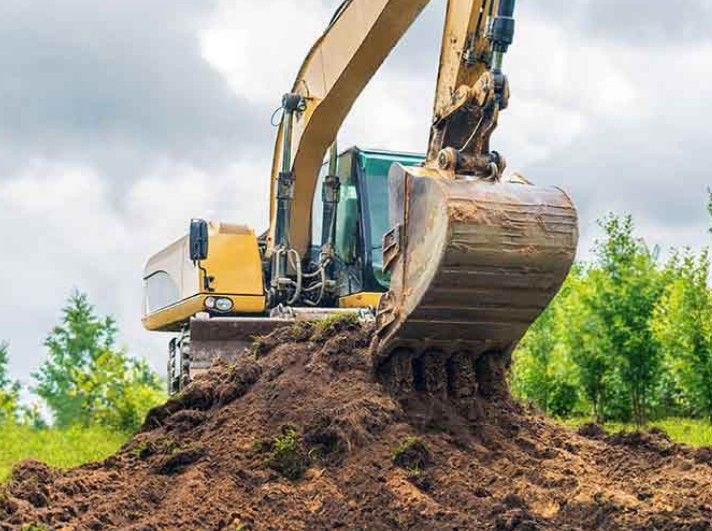
A site cut in Dubbo on a sloping block typically involves two operations — and cut and fill is exactly what it sounds like. The high side of a site is excavated — that's the cut. The excavated material is then placed and compacted on the low side to build it up — that's the fill. The result is a level or stepped platform suitable for construction.
The goal of a well-designed cut and fill operation is balance: the volume of material removed from the cut areas equals the volume needed to fill the low areas, so nothing has to leave the site and nothing has to be brought in. When that balance is achieved, the earthworks cost is primarily labour and machine time. When it isn't, the budget absorbs additional costs that can be significant.
Why Material Balance Is the Biggest Cost Lever in Earthworks
For bulk earthworks in Dubbo and the Central West, trucking spoil off-site and importing fill are two of the largest variable costs in any earthworks budget — and they're also the ones most directly influenced by the design and planning phase rather than by fixed site conditions.
Spoil removal means paying for excavated material that can't be used on site — either because there's more cut volume than fill volume, or because the material isn't suitable for use as structural fill. Every load that leaves the site carries a haulage cost and often a tipping fee. On a large cut, that adds up quickly.
Imported fill means paying for material that has to be brought onto the site because there isn't enough suitable cut material to achieve the required fill height. Fill material, haulage and compaction layers all carry cost — and on sites that need significant built-up platforms, the imported fill bill can rival the machine hire cost.
A balanced design eliminates both of these costs. That's not always fully achievable, but even reducing the imbalance — cutting volumes on one area that can be redistributed to another rather than trucked off — produces meaningful budget savings on most projects.
Getting the balance right from the outset also supports what comes next — as our guide on how
excavation sets up strong building foundations explains, the earthworks phase sets the standard everything built on top depends on.
When a Balanced Cut and Fill Isn't Achievable
A perfectly balanced cut and fill is the goal, but it isn't always possible. Several site conditions can prevent full balance regardless of how the design is optimised.
Rock: When excavation encounters rock, the material can't typically be used as fill in the way that soil can. Rock spoil usually needs to leave the site or be placed in specific locations where it won't affect building or pavement performance. Rock excavation also costs significantly more per cubic metre than soil excavation, which affects the overall earthworks budget independently of the fill balance.
Unsuitable or contaminated material: Soil that is highly reactive, organically contaminated, waterlogged or structurally unsuitable can't be used as engineered fill under structures or pavements. It has to be removed and replaced with imported material that meets the required specification. This is a common issue on sites with old fill, former agricultural use or areas with high organic content in the soil profile.
Material shrinkage: Soil that is excavated and recompacted as fill doesn't return to exactly the same volume. Cut material typically yields less fill volume than the cut volume suggests — a factor called shrinkage or bulking that needs to be accounted for in the earthworks design. Ignoring it produces a shortfall in fill volume that has to be made up with imported material.
Tight or irregular sites: On sites where the cut and fill areas are far apart, access between them is limited or the logistics of moving material across the site are complicated, achieving a practical balance becomes more difficult even if the volumes work on paper.
For larger projects involving multiple lots or infrastructure, subdivision and civil earthworks planning at the design stage is where the most significant cost savings are found.
Why Compaction Matters for Everything Built on Fill
Fill that isn't properly compacted creates problems for anything built on top of it. Loose or poorly compacted fill settles over time — sometimes unevenly — which causes cracking in slabs, movement in footings and problems with drainage and pavement performance.
Proper compaction involves placing fill in controlled layers, typically referred to as lifts, and compacting each layer to a specified density before placing the next. The required compaction standard depends on what's being built on top: a residential slab has different compaction requirements from a road pavement or a heavy commercial floor.
For owner-builders and developers, the practical implication is that fill areas need to be properly documented and tested. A compaction report from the earthworks contractor provides the evidence that the engineer and certifier need to confirm the fill platform is suitable for the proposed structure. Building on fill without that documentation creates risk — and potentially an expensive rectification process later if issues develop.
What to Provide Your Earthworks Contractor to Get an Accurate Quote
The accuracy of a cut and fill quote depends almost entirely on the quality of the information provided to the contractor. Earthworks pricing based on rough estimates of site conditions tends to produce rough estimates of cost — and the surprises that follow are rarely pleasant ones.
For an accurate cut and fill assessment on a Dubbo site, the most useful inputs are:
- A site survey with existing and proposed levels — this is the foundation of any meaningful cut and fill calculation. Without survey data, volume calculations are guesswork.
- Geotechnical information — a soil test report identifies the material types likely to be encountered, whether rock is present and whether any of the material has fill or contamination issues that would affect its suitability for reuse.
- The proposed building and pavement footprint — knowing what will be built where determines the compaction requirements for the fill platform and informs where the cut and fill areas need to be.
- Site access information — machine size, access constraints and proximity to neighbouring structures all affect how the earthworks can be practically executed.
Providing this information upfront allows the contractor to calculate volumes, identify likely imbalances and price the work accurately rather than carrying contingency for unknowns.
Get in Touch
At
Boland Contracting, we carry out earthmoving across Dubbo and the Central West for developers, owner-builders and project managers who want the earthworks phase priced and executed accurately from the start. Whether your project involves a straightforward residential cut and fill or a larger-scale site preparation, our team can assess the site, calculate the material balance and provide a detailed quote before work begins.
Get in touch to discuss your project or arrange a site assessment.