Driveway Construction In Dubbo: What To Expect From Start To Finish
A driveway can look straightforward from the surface, but most long-term problems start underneath. In many cases, cracking, rutting, potholes or water pooling trace back to skipped preparation work rather than the material on top. That becomes more noticeable in areas with clay-heavy ground that expands and contracts through seasonal changes, or after heavy rain that pushes water through weak sections.
For property owners planning a new access road, replacing an ageing drive or upgrading a rural entry point, understanding the process of earthmoving in Dubbo before requesting a quote can make conversations far easier. Knowing what happens at each stage also helps explain why two driveway projects with similar lengths can end up with very different costs.
From site inspections and drainage planning through to compaction and final grading, driveway construction involves far more than spreading gravel across bare ground. This guide walks through the full process, including the factors that commonly influence driveway construction projects.
Understanding the Site Before Machinery Arrives
Every driveway starts with the land itself. Before excavation or material delivery begins, the site needs to be assessed properly so the ground conditions, slope, water movement and intended vehicle traffic are understood.
A residential driveway used by family vehicles will generally require a different build-up compared to a rural access road carrying tractors, livestock trucks or delivery vehicles. Existing ground levels also play a role. Some sites already have a stable base underneath, while others contain soft patches, reactive clay or drainage problems that need attention first.
During the assessment stage, contractors commonly look at:
- Ground stability & soil composition
- Existing drainage paths & low points
- Access for machinery & material delivery
- The width & shape of the proposed driveway
- Vehicle types expected to use the surface
- Areas affected by erosion or pooling water
This early planning stage is often where future maintenance issues can be reduced. A driveway that follows natural water flow and accounts for seasonal movement is less likely to suffer washouts or edge collapse after heavy rain.
Why Drainage Planning Matters More Than Many People Expect
Water is one of the main causes of driveway deterioration. Even a well-compacted surface can begin breaking down if water repeatedly sits underneath or flows across the same sections during storms.
Properties with sloping ground or clay-based soils can become particularly vulnerable during periods of rain. Water may collect underneath the surface, soften the subgrade and create movement under traffic loads. Over time, this can lead to cracking, rutting and uneven settlement.
Drainage planning may involve:
- Spoon drains running alongside the driveway
- Cross-fall grading to direct water away
- Culverts beneath access points
- Shaping the driveway crown correctly
- Redirecting runoff from sheds, roofs or nearby paddocks
In some cases, drainage work forms a significant part of the project because stabilising water movement becomes just as important as the driveway surface itself.
Clearing & Excavation: Preparing the Ground Properly
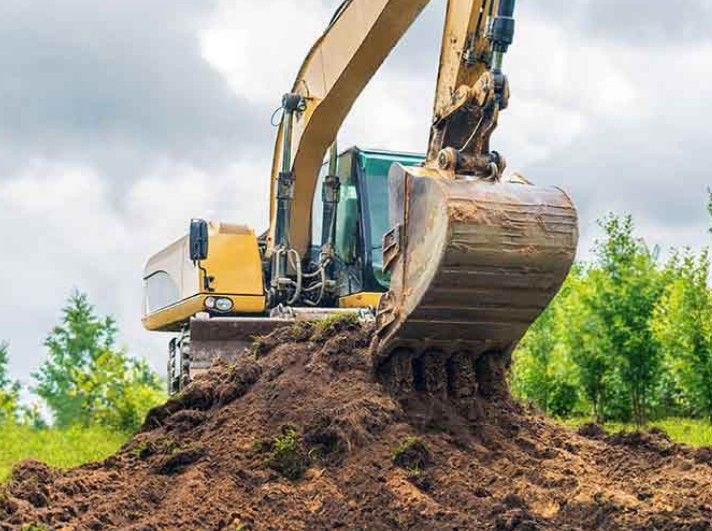
Once the layout and drainage plan are established, the construction area is prepared for excavation. This stage usually involves removing vegetation, stripping topsoil and cutting away unstable material.
Topsoil contains organic matter that shifts and decomposes over time, making it unsuitable as a foundation layer. If soft material remains underneath the driveway, heavy traffic can eventually force the surface downward.
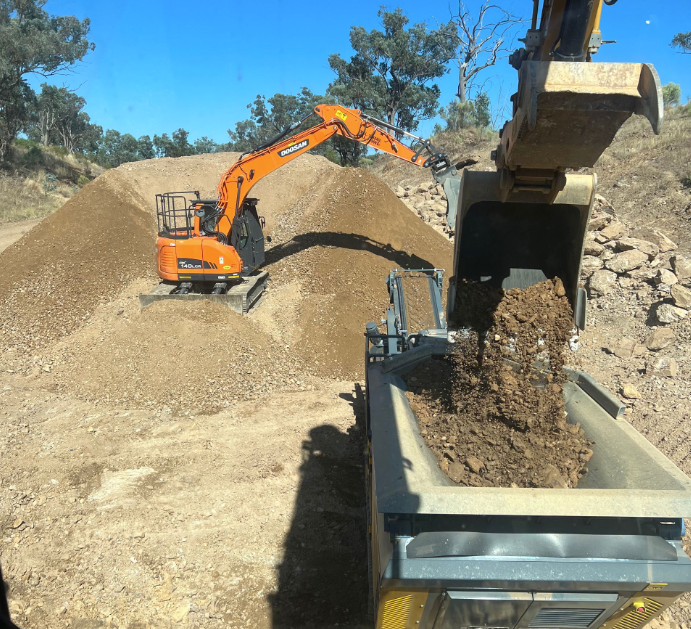
Earthmoving in Dubbo projects often involves excavation machinery such as:
- Excavators
- Bobcats or skid steers
- Graders
- Rollers and compactors
- Water carts for moisture control
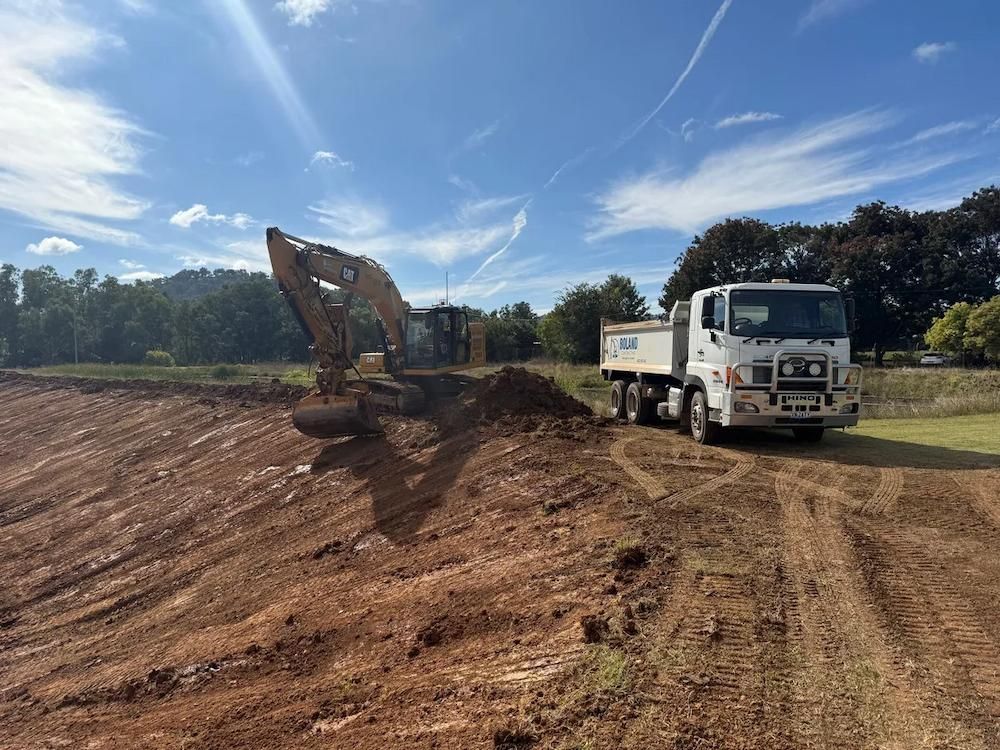
The amount of excavation depends on the condition of the existing ground and the intended finish. Some sites require only shallow preparation, while others may need substantial cut-and-fill work to create a stable, even foundation.
This stage also shapes the driveway profile. Correct grading helps direct water away while creating smoother access for vehicles entering and leaving the property.
The Role of Subgrade Preparation
One of the most overlooked parts of driveway construction happens below the visible surface. The subgrade is the compacted soil layer underneath the road base, and its condition affects how the driveway performs over time.
If the subgrade remains soft, wet or uneven, surface materials may shift regardless of how much gravel is added on top. In reactive clay areas, seasonal moisture changes can also create movement beneath the driveway.
Subgrade preparation can include:
- Moisture conditioning before compaction
- Removing unstable or saturated sections
- Adding imported fill where needed
- Compacting in layers to reduce movement
- Stabilising weak ground with additional material
The preparation work may not be visible once the project is complete, but it forms part of the structure that supports traffic loads and weather conditions.
Choosing the Right Road Base Material
Road base acts as the structural layer between the subgrade and the final driveway surface. Different materials suit different traffic volumes, weather exposure and property requirements.
Road bases in Dubbo often need materials capable of handling seasonal movement and rain events without excessive displacement. The type of aggregate selected can influence drainage behaviour, compaction strength, dust levels and long-term maintenance.
Common road base options may include:
- Crushed rock blends
- Recycled aggregates
- Gravel & decomposed granite mixes
- Quarry road base products
- Higher-strength materials for heavy vehicle access
The required thickness also changes depending on vehicle use. A residential driveway may need a different pavement depth compared to rural access roads supporting machinery or transport vehicles.
Material selection is usually tied closely to site conditions rather than appearance alone. A surface that looks suitable initially may still deteriorate quickly if the base material does not suit the underlying ground.
Compaction: The Step That Holds Everything Together
Compaction helps bind and stabilise the driveway layers so they can handle traffic and changing weather conditions. Without adequate compaction, materials can loosen, settle unevenly or develop corrugations.
Compaction generally occurs in stages rather than all at once. Layers are spread gradually and compressed using rollers or vibrating compactors.
Several factors influence compaction quality:
- Moisture content within the material
- Layer thickness
- Type of aggregate used
- Weight & frequency of traffic expected
- Existing ground stability
If materials are too dry, they may not bind properly. If they are overly wet, the ground can become unstable during rolling. Moisture control often plays an important role throughout construction, particularly during changing weather conditions.
For longer rural driveways, compaction work can take considerable time because each layer needs to settle consistently across the full length of the project.
Final Grading & Surface Finishing
After the base layers are compacted, the driveway moves into final grading and finishing. This stage shapes the surface for drainage, smoothness, and vehicle use.
Depending on the project, the final surface may involve:
- Gravel finishing
- Decorative aggregate
- Asphalt preparation
- Concrete-ready grading
- Additional topping layers
The grading process helps create a consistent surface profile while maintaining runoff direction. Even small grading variations can affect how water behaves during storms.
For rural properties, finishing work may also involve shaping entry points, turning areas or transitions between paddocks and access roads.
At this stage, contractors may also check:
- Surface levels & cross-fall
- Drainage flow during runoff
- Edge stability
- Compaction consistency
- Vehicle accessibility
Although the visible surface attracts the most attention, the finished result still depends heavily on the preparation completed underneath.
Factors That Commonly Affect Driveway Costs
Driveway pricing varies significantly between properties because no two sites share identical conditions. Length alone rarely tells the full story.
A short driveway with poor drainage and unstable soil may involve more preparation than a longer access road built across firm ground.
Several factors commonly influence costs:
- Site access for machinery
- Amount of excavation required
- Soil stability & moisture conditions
- Drainage infrastructure needs
- Material selection & transport distance
- Driveway width & thickness
- Surface finish type
- Slope & grading complexity
Weather can also affect scheduling and construction timing. Wet ground conditions sometimes delay earthworks because machinery movement and compaction become harder to manage safely.
Understanding these variables before requesting quotes often makes it easier to compare different scopes of work rather than focusing only on surface appearance.
Maintenance After Construction
Even well-constructed driveways benefit from occasional maintenance, particularly on larger rural properties exposed to heavy traffic and changing weather.
Minor maintenance tasks can help reduce deterioration over time, including:
- Regrading worn sections
- Clearing blocked drains or culverts
- Replacing displaced gravel
- Repairing erosion at edges
- Monitoring water runoff after storms
Driveways exposed to repeated heavy vehicle use may require periodic topping or reshaping as traffic patterns develop.
Addressing small issues early can help prevent larger reconstruction work later, especially after major rain events that place pressure on drainage systems and road base layers.
Speak With a Local Team About Your Driveway Project
Planning a driveway involves far more than selecting a surface material. Ground preparation, drainage, compaction and road base selection all play a role in how the finished driveway handles weather, traffic and seasonal movement. At
Boland Contracting, we carry out
earthmoving in Dubbo and
driveway construction in Dubbo for residential, rural and development sites, including road base work suited to local soil conditions and rain-related challenges.
Contact our team to discuss your property, planned access requirements or upcoming construction works.